Showing posts with label older projects. Show all posts

Sunday, 17 November 2013

Soil Salinization

By Ashley Gervais-LeClaire, Kijana Henry, and Melody Tadeo
This was a group project for an environmental science class about the causes, effects, and potential solutions of soil salinization. This is the handout, and you can follow this link to see Ashley's Prezi.


Soil Salinization


The buildup of salt in soil occurs when there is insufficient irrigation, and salts from the water remain in the soil increasing the salt concentration, degrading the soil. Soil salinization affects approximately 33% of the world’s irrigated land, and can cause damage to biodiversity, agriculture, and water sources.


Natural Causes:

- Water movement causes salt to accumulate in soil increasing salt concentration when water evaporates and leaves salts behind. Risk increases with arid soil and when there is more meltwater than plants need, and decreases with more rainfall.
- Overwashing and seepage of saline waters and salt spray from crashing waves in saltwater bodies.
- Rising of the water table.
Anthropogenic Causes:
- Road salts washing onto land.
- Overuse of fertilizers.
- Improper water management
- Over-exploitation of groundwater leading to intrusion of saline water in the water table.
- Fallowing and overgrazing in dryland areas.

Soil Salinization in Canada:

-  Occurs in the Southern areas of the prairies. Saskatchewan and Alberta are at greater risk because they are more arid than Manitoba.
-  The decrease in Summer Flow farming had decreased the salt content of the prairie soil. (Summer Flow is a farming practice that leaves farmland out during growing season so the nutrients in the soil are retained for future crops.)
-  Along with the nutrients the salt in the soil is also retained making the soil for salt.

Effects:

- Many plants are intolerant of high levels of salt, because the salts decrease water uptake from the roots, excepting halophytes (salt-tolerant plants).
eg. red buckeye, white ash, honeylocust, saltbush, St. John’s wort, and bayberry.
Mosses are often very tolerant to to sodium salts (such as the most common in salinization, NaCl), but are susceptible to potassium salts.
- Kills plants, lowering biodiversity of plants and reduces food sources for other species.
- Potential desertification of arid lands.
- Many crops are harder to cultivate in agriculture, decreasing human food sources, reducing sales for farmers, and having a negative impact on the economy.
- Water sources can be tainted by salinization in surrounding soil, decreasing water quality and affecting aquatic ecosystems and other species relying on the water source.

Solutions and Preventative Measures:

- Minimize the use of fertilizers, and ensure that fertilizer use is in safe doses.
- Planting trees in agricultural areas (“agroforestry”) reduces risk of soil salinization.
- Using organic matter to improve soil structure, drainage and moisture holding capacity.
- The planting of salt-sensitive plants uphill or away from salted roads, and planting salt-tolerant plants where there is high risk of salinization.
- Mulching to prevent evaporation and buildup of salts.


- Leaching through sufficient irrigation and monitoring the quality of irrigated water, ensuring that it has safe amounts of salt (< 0.5 g/L is best).


Bibliography
Appleton, B. e. (2009, May 1). Trees and Shrubs that Tolerate Saline Soils and Salt Spray Drift - Home -
Virginia Cooperative Extension . Publications and Educational Resources - Home - Virginia Cooperative Extension . Retrieved February 19, 2013, from http://pubs.ext.vt.edu/430/430-031/430-031.html

Dregne, H. E. (n.d.). Desertification of Arid Lands. Center for International Earth Science
Information Network. Retrieved March 8, 2013, from http://www.ciesin.columbia.edu/docs/002-193/002-193.htm

Eblin, J. (n.d.). Use of Salt to Kill Moss | eHow.com. eHow | How to Videos, Articles & More -
Discover the expert in you. | eHow.com. Retrieved February 19, 2013, from http://www.ehow.com/facts_7201481_use-salt-kill-moss.html

Food and Agriculture Organization of the United Nations. (n.d.). Forests, Trees and Food. FAO:
Food and Agriculture Organization of the United Nations, for a world without hunger. Retrieved February 19, 2013, from http://www.fao.org/docrep/006/U5620E/U5620E05.htm

Food and Agriculture Organization if the United Nations. (n.d.). Water quality for agriculture. FAO: Food
and Agriculture Organization of the United Nations, for a world without hunger. Retrieved March 5, 2013, from http://www.fao.org/docrep/003/T0234E/T0234E02.htm

Gergely, T. (n.d.). Soil Salinisation. EUSOILS - European Soil Portal Home Page. Retrieved February
19, 2013, from http://eusoils.jrc.ec.europa.eu/library/themes/salinization/

Department of Primary Industries. (n.d.). Chapter B7. Managing saline soils. NSW Department of

Primary Industries. Retrieved May 3, 2013, from www.dpi.nsw.gov.au/__data/assets/pdf_file/0008/127259/Managing-saline-soils.pdf

Stocking Salmon in Lake Ontario (cons project)

(Updates June 1, 2015)

This was an oral presentation for a biology research project and presentation for stocking Salmon in Lake Ontario. I was assigned to present to cons of stocking Lake Ontario with Salmon, though there are many other benefits that are just not covered in this half of the assignment.

The Cons
The cons of stocking salmon generally looks towards the ecosystem in a more holistic view, then kind of zooming on specific side-effects.
  • They are non-native species, competition for native species
  • Over-Predation on Alewives
    • These are bad for the ecosystem as a whole and fishing industry
  • Heavy reliance on human maintenance

Competition for Native Species
Despite the need for more salmon, there a study conducted in 2009 shows that there is a reproducing native salmon population in Lake Ontario. The study found that the 2.3 million Chinook salmon stocked in Lake Ontario annually produce less than half of the Chinook in Lake Ontario. Most of them were born wild in streams like the Salmon River in New York, so by releasing non-native and invasive strains we are creating more competition for prey for natural strains. These non-native species reduces biodiversity of other native fish too, such as Lake and Brook Trout and American Eel, all of which are in decline in Lake Ontario.
More recent research also suggests concerns over the long-term predator-prey balance, and with other factors such as weather, other invasive species, natural reproduction and others make take unpredicted effect in changing the ecosystem’s balance. An example of dangers weather poses to populations was in 1976–1977 when alewife populations were depressed because of unusually cold temperatures.


A Threat the Alewife Population
A rising issue is that Chinook salmon in Lake Ontario are going beyond controlling the population of alewives, but are beginning to overwhelm it. Although they were an invasive species and had to be controlled after they established themselves, they have become a food supply for different predators and statistics are showing that there may not be enough anymore.
We can look to Lake Huron’s ecosystem where alewife populations collapsed in 2004, which also brought down the fishing industry with it. The collapse in Lake Huron has been attributed to the salmon stocking, which is the same thing that is being done in Lake Ontario. Mark Ebner, fish assessment biologist with the Chippewa Ottawa Resource Authority, likens trying to balance alewife populations to walking on a tightrope where “you can fall off on either side” meaning that although we don’t want too many alewives, not enough to support the ecosystem is also bad.
Past evidence of such a threat to Lake Ontario is demonstrated by past need to constantly modify the number of salmon released so as not to overwhelm the alewives; a very delicate changing balance. In the early 90s their populations were of a concern so salmonoid stocking levels were reduced to 4.5 million, and now must be maintained between 4 and
5.5 million per year.
From 1974-1977 as alewife populations went down because of predators such as non-native salmon, their prey, zooplankton, had a growing population. The balance of zooplankton population is also an important part of the lake’s ecosystem, such as being prey to algae and energy storage. These changes also cause other changes in the water-quality of the lake, including eutrophication and also contamination of other fish species. Cultural (human-induced) eutrophication led to nuisance algal blooms and water quality deterioration in Lake Ontario in the past, specifically 1940s-70s.Today there are similar issues in Lakes Huron and Ontario because of phosphorus levels and algae population, and the contamination of some fish is also a concern for human health because of bioaccumulation when fish are eaten by people.


Growing Dependence on Human Maintenance
Because of all these changes to the ecosystem management of the lake has become very complex, heavily relying on human maintenance. In 2010 the Committee on the Status of Endangered Wildlife In Canada declared the Atlantic Salmon to be extinct in Lake Ontario, as all the different strains that have been introduced to attempt to replace the extinct species from the 1800s unfortunately have failed to give any evidence of self-sustaining populations, so therefore the ecosystem relies a lot on human activity and monitoring.
Being able to maintain balance within an entire ecosystem is a heavy responsibility which has built up over time because we have to be able to maintain not only direct connection with the salmon, but also with all the other species they effect. The more human attempt to control the ecosystem, the more control it requires to be sustained so if we choose to continue to release non-native salmon into Lake Ontario, it is vital that we are prepared to handle the responsibility to reduce negative impacts on the other species living in it.


Friday, 12 April 2013

Harnessing Wind Power

Harnessing Wind Power
Melody Tadeo
April 12, 2013
Mr. Wood
     For generations humans have harnessed the power of the wind for various uses including transportation and a power source for processing resources in a windmill . Today, wind turbines are being used to provide roughly 1 per cent of Earth’s energy, being a source that is both renewable and highly controversial. The benefits and disadvantages of using this force to produce energy include benefits and damage to ecosystems, economic gain and risk, and social acceptance, with changing consideration as conditions change.
The Need for Cleaner Energy
    What is generally considered the foremost important reason to use wind turbines to generate electricity is that it is a renewable resource. To generate electricity through turbines, after production there are zero pollutants emitted into the atmosphere (Nannette Richford, n.d.). With a growing need for alternative fuel sources, ‘clean energy’ that cause less harm to the environment through emission of pollutants and damage to natural ecosystems, wind power has become a well-known alternative that requires no fossil fuels to generate electricity. The depletion of is of great concern to people in nations around the world, and the need for renewable sources of energy grows with every barrel of oil extracted from the Earth. In 2010 America consumed about about 7 billion barrels of refined petroleum products and biofuels (U.S. Energy Information Administration, 2012), and about 19 per cent of the world’s energy is already provided by renewable sources, a number that is likely to continue to rise (BirdLife International, 2012). With more and more evidence suggesting damage to the environment because of pollutants —including man-made climate change— it becomes more and more clear that the human race must reduce emission of pollutants, and modify energy sources to meet a mandatory standard to minimize the consequences.
Wind Power Technology
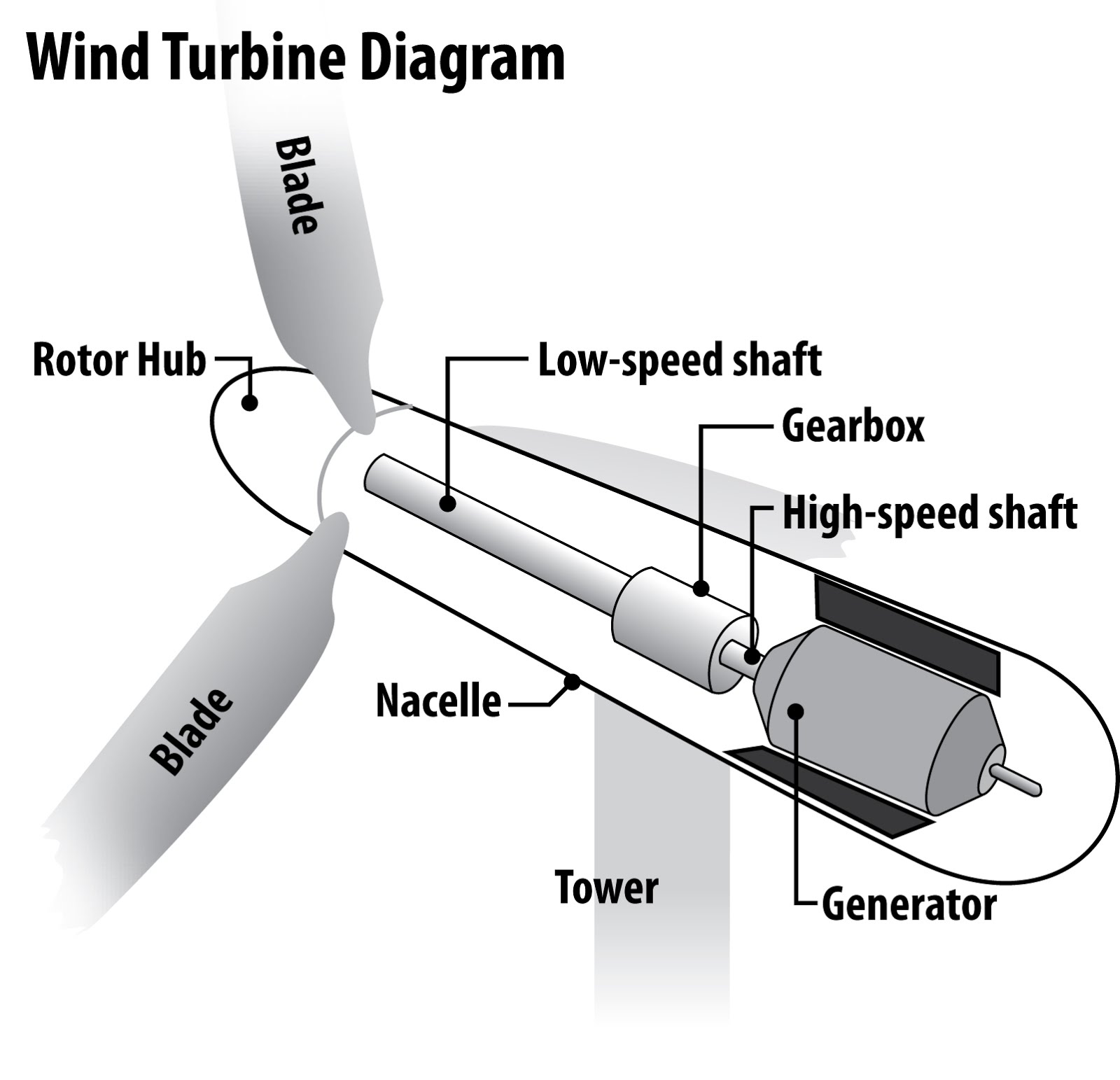
    The technology of using the wind to turn blades on a mill is centuries old, and a similar technology has been developed for the purpose of generating electricity through wind turbines. Before installing a wind turbine, a suitable sitting site must be selected. There are various factors that must be considered, including clear required land area without other structures blocking the flow of air, and ensuring that the area experiences enough wind to generate the maximum amount of energy possible (Clarke S., Rural Environment/OMAFRA, 2003). After the turbine is installed, it can begin collecting the wind’s kinetic energy with the blades of the turbine, mounted on top of a tall tower to take advantage of stronger and more consistent winds, with OMAFRA recommending a height of 24-37 metres. The function of the two or three blades is to gain lift from the motion of the wind, in turn rotating the blades. The rotation continues through the low-speed shaft and gearbox where the speed is optimized, to rotate the generator thus producing electricity. Wind turbines of various sizes are used to power individual homes and farms, or can also be attached to an electric grid system in conjunction with other wind turbines, often in large field where many turbines are placed in one area with some distance between them. Still, innovation continues are people are considering other possibly more efficient ways of producing more energy using wind power, such as a difference in size for larger and smaller-scale use, and using it in conjunction with other renewable sources of energy (Clarke).
Wind Power in Ontario
    In Ontario the amount of wind power produced is monitored on a daily basis as weather conditions change. Depending on the number of megawatts being generated, the ‘Ontario Wind Output’ is essentially enough to meet the needs of an entire city. The province’s power grid has connections to over 1,500 megawatts of wind-generated electricity, a number that is likely to rise with many more wind projects scheduled for the next couple of years (Independent Electricity System Operator, 2013). There are many who support these missions, such as the Canadian Wind Energy Association, which believes that by 2025 wind power can supply 20 per cent of Canada’s electricity (2008). As of 2012, Ontario and British Columbia also are planned to be the first provinces in Canada with offshore wind farms being developed (Canadian Geographic, n.d.).
Advantages and Disadvantages of Wind Turbines
    One advantage of using wind power is that it is a versatile source of energy for a variety of areas. Especially remote areas can benefit from this global force of nature because it can be used independent from other shared sources within larger communities. Still, it can also be used as a shared resource in a network of connections with different facilities and power sources, being equally as useful in a larger scale. Some potential consequences or risks associated with it can be averted by using wind power in combination with other energy sources such as solar power. By combining wind power with other sources of renewable energy, chances of power being inaccessible during unfavourable conditions are are greatly reduced with wind power playing it’s own part in compensating for other sources when conditions are not optimal for production of energy by things such as the sun. According to sources such as the Battelle Pacific Northwest Laboratory and the Canadian Wind Energy Association it is estimated that wind power has the potential to supply up to one fifth of America’s energy demands (Clarke).  The degree of reliability of the wind in areas with more ideal conditions ensures a cleaner source of power with an average availability factor of over 98 per cent, which is higher than most power plants which require maintenance (The American Wind Energy Association, National Renewable Energy Laboratory, U.S. Department of Energy, n.d.).
    Although the convenience of the wind can be an incentive for using wind power, the unreliability of it can also be an issue. Despite being readily available to many areas, just as other conventional methods of producing energy a wind turbine likely will not produce energy all the time. From an economic standpoint, there are some risks associated with using wind turbines as a power source. For a small wind turbine to be cost effective, 14.4-16.2 km per hour winds are necessary as well as enough land which varies depending on the size of the turbine, otherwise the cost of owning a wind turbine may be greater than the monetary benefits.  Most of the coast associated with them are buying the turbine itself --representing 12-48 per cent of the total cost-- and installation. The price of purchase varies depending on it’s size, ranging from $2 thousand to 8 thousand for a small one depending on the kilowatts. Reliability of wind power is often questioned since it’s strength and turbulence varies, and because each turbine has a ‘wind shadow’ behind it where the air flow is interrupted sufficient space must be given between individual turbines (Radford, 2013), though this is comparably small. Finding a suitable sitting area to place such an investment can also be challenging. One factor that is considered when selecting sitting sites is surrounding structures such as trees and buildings that can interfere and limit the flow of air; trees being of special concern because they grow and increase in height over time, whereas turbines do not grow to reach the wind (Clarke).
    Encroaching on natural habitats and interfering with ecosystems is a problem with wind turbines. Not only do some believe wind turbines interrupt beautiful natural scenery, but the bigger issue is the threat it poses local to wildlife. Careful consideration for an area’s wildlife must be made when selecting sitting sites for wind turbines, which are generally extensive in area, as to avoid upsetting the local ecosystem such as invasion or even destruction of natural habitats for a turbine’s required space. Birds and bats are of special concern regarding collisions with the turbines causing injury and horrible deaths. This too, is a debated point, as The Ontario Ministry of Agriculture and Food’s website states that “Wind turbines are not, as many people believe, dangerous to birds. A sliding glass door is more dangerous to birds than a small wind turbine.” (Clarke, wind availability ¶2).  However, sliding glass doors do not extend as high into the air as wind turbines, and would be be even harder for bats to detect at night using echolocation. Although the estimated number of birds killed by wind turbines varies, according to an estimate by the U.S. Fish and Wildlife Services it may be as high as 440,000 per year (American Bird Conservancy, 2010). This is an obvious danger to flying creatures and threat to biodiversity within an ecosystem, because not only will animals suffer the injuries and death, but the rest of the ecosystem will suffer because of this unbalancing factor.‘Bird-smart’ measures must be considered in order to minimize bird deaths because of wind turbines. Especially when sitting areas are high-risk zones in terms of posing a threat to birds, measures that can be taken includes burying transmission lines, and following standards set by the Avian Power Line Interaction Committee has also been recommended by the American Bird Conservancy (2010). Still, various animal species including birds continue to suffer because of greenhouse gas emissions from the combustion of fossil fuels to provide energy, which is also a problem of comparable weight.
    A social and potentially environmental issue with wind turbines is noise pollution. According to OMAFRA, a typical wind turbine can be heard at about 45 decibels from 250 metres away. That sound level is approximately 15 decibels lower than an average conversation which is typically around 60 decibels. It is important that zoning laws and regulations are adhered to when choosing a sitting sites, but also to take into consideration the feelings of neighbours in the area. Many people who live in areas with wind turbines frequently complain about the aerodynamic and mechanical noise generated at all times of day. It is suggested that small, privately-owned turbines are placed at least 250-300 metres away from neighbours (Clarke). It is also possible that this noise may interfere with animals’ abilities to survive, particularly ones that depend on sense of hearing for hunting, eluding predators, or even navigation.
    Despite some social resistance to the use of wind turbines, their potential to help in the social development of more environmentally-conscious communities poses an advantage that will be considered in making global decisions regarding wind power. One aspect of this development is in already-developed countries, regarding the amount of fossil fuels consumed in production and household use. There are individuals who believe that some wars are caused by the greed for oil, and by replacing this depleting commodity with renewable resources such as wind power which can be applied in many different areas, a country becomes less dependant on oil imports. This can improve the environmental, social, and economic state of a country, encouraging a more healthy planet and creating more environmentally-conscious jobs and another possible source of income for those owning wind turbines connected to power grids (Nannette Richford),. The versatile technology of wind power allows it to be used in a variety of places, including in countries that are considered ‘underdeveloped’. Wind power can give countries with available wind resources an industry and source of electricity which does not contribute to the problem of pollution (Abramowski J., Posorski R., 2000). The social advantage of wind power is broad enough that it encompasses reducing carbon emissions from already-industrialized regions, and potentially improving the quality of life in regions where some people may feel they are lacking because of unavailability of fossil fuels.
    The possible dangers associated with the use of wind turbines has motivated some staunch resistance, but the possibility of improvement has also sparked some movement in a world in dire need of renewable energy for environmental, social, and economic reasons. The debate continues over whether or not to utilize this powerful force of nature to generate energy for our own use, but what we do know is that wind power is proving to have a potential place of supplementing other cleaner sources of electricity for vital change to be made for the sake of the Earth and all of it’s inhabitants.


Bibliography
Abramowski, J., & Posorski, R. (2000, February 16). Wind Energy for Developing Countries. DEWI-
German Wind Energy Institute. Retrieved April 10, 2013, from www.dewi.de/dewi/fileadmin/pdf/publications/Magazin_16/06.pdf
American Bird Conservancy. (n.d.). Wind Energy Frequently Asked Questions. American Bird
Conservancy - Home. Retrieved April 3, 2013, from http://www.abcbirds.org/abcprograms/policy/collisions/wind_faq.html
American Wind Energy Association, U.S. Department of Energy, the National Renewable Energy
Laboratory. (n.d.). The Most Frequently Asked Questions about Wind Energy. Home. Retrieved April 8, 2013, from http://www.culturechange.org/wind.htm
BirdLife International. (n.d.). Managing Effects of Wind Power on Birds and Bats | BirdLife
Community. BirdLife International - conserving the world's birds. Retrieved March 26, 2013, from www.birdlife.org/community/2012/10/managing-effects-of-wind-power-on-birds-and-bats/
Canadian Geographic. (n.d.). The Canadian Atlas Online - Wind energy. Canadian Geographic -
Canadian Geographic Magazine. Retrieved April 3, 2013, from http://www.canadiangeographic.ca/atlas/themes.aspx?id=windenergy&sub=windenergy_basics_history
Clarke, S. (n.d.). Electricity Generation Using Small Wind Turbines at Your Home or Farm. Ontario
Ministry of Rural Affairs / Ministry of Agriculture and Food / Ministère des Affaires rurales / ministère de l'Agriculture et de l'Alimentation de l'Ontario. Retrieved March 26, 2013, from http://www.omafra.gov.on.ca/english/engineer/facts/03-047.htm
Independent Electricity System Operator. (n.d.). Wind Power in Ontario. Independent Electricity
System Operator (IESO). Retrieved March 26, 2013, from http://www.ieso.ca/imoweb/marketdata/windpower.asp
Radford, T. (2013, April 9). Wind power 'has inescapable limits'. Climate News Network, n/a.
Retrieved April 8, 2013, from http://www.climatenewsnetwork.net/?s=wind+turbines
Richford, N. (n.d.). Explanation of Wind Turbines | National Geographic. Green Living | National
Geographic. Retrieved October 11, 2013, from http://greenliving.nationalgeographic.com/explanation-wind-turbines-2967.html
U.S. Energy Information Administration (EIA). (n.d.). How much oil does the United States consume
per year? - FAQ - U.S. Energy Information Administration (EIA). Independent Statistics & Analysis U.S. Energy Information Administration (EIA). Retrieved April 3, 2013, from http://www.eia.gov/tools/faqs/faq.cfm?id=33&t=6
Wednesday, 3 April 2013

Blue Alert: Walking on Thin Ice


In 2012 the record-loss of sea ice has raised the debate over whether it was an anomaly, or the beginning of a disastrous trend. What is certain is that current reforming ice will be the thinnest on record, meaning much less summer ice, and some are predicting that summer sea ice could be almost completely gone by the year 2016. Concern is being backed up ‘blue alert’ satellite images of disappearing sea ice, a testament to the fact that melting sea ice may be an even bigger environmental concern for 2013 than warming itself. Concerns about water levels are being raised again, however, the IPCC (Intergovernmental Panel on Climate Change) has not been able to predict if the climate in some specific regions will ultimately be wetter or drier, making it more difficult for politicians at the Doha climate talks to discuss ways to adapt to the ‘unstoppable’ minimum 2 °C rise. These is specific uncertainty in the northern hemisphere, as 2012 data showed a slowing of the jet stream resulting in extreme weather conditions including a heatwave in Russia, cold spells in Europe, and drought in America.
This reminded me of something that read,“What we do on land [and in the air] is reflected in the water”. We are conscious that the condition of our atmosphere is going from bad to worse, but the ‘blue alert’ and disappearing sea ice is a shocking gauge at how far we have really gone. Hearing more news about the worsening condition of our environment from the atmosphere to the way that it is affecting everything else in nature —even the weather—  is shocking. So much life on Earth will be affected by drastic changes in weather. Increased awareness has proven to lead to positive change in our thinking and attitudes, and all the time there is more news saying similar things about the increasing danger the environment is in, and although we’ve already caused a lot of damage, we can still make changes today to start improving.

Sources
Pearce, F. (2013, January 2). 2013 Smart Guide: Arctic melt will spark weird weather - environment -
02 January 2013 - New Scientist. New Scientist. Retrieved April 3, 2013, from http://www.newscientist.com/article/mg21628965.300-2013-smart-guide-arctic-melt-will-spark-weird-weather.html

Monday, 1 April 2013

The Air of Mice and Men


A study published in Environmental Health Perspectives showed that baby mice exposed to concentrated, real urban air particles were more impulsive later than ones that were not. The mice were trained that to receive a sugary reward they could either press a lever 25 times, or wait for one to be released (called "delay discounting"). However, the releasing  interval were irregular and if a mouse pressed the lever, the waiting time would be reset. The ones that breathed in the pollution particles at four-days-old reset the system up to 43% more times by pressing the lever instead of patiently waiting. This number exhibits how those exposed to urban air pollution in the developing stages of life show more impulsive behaviour for self-gratification, and less patience as adults than ones not exposed to the tiny pollution particles. Such impulsive behaviour has been linked with cognitive and behavioral disorders such as ADHD and substance abuse, strongly suggesting a link between exposure to pollution during the developing stages of the brain and behavioural effects later on in life. Other dangers of ultrafine pollution particles from sources such as cars and factory production include damage to the lungs, heart, and brain, which are being made more evident through studies like this.
Polluted air is bad for not only lungs, but also the minds of people and other animals all sharing the same air and must suffer because of mankind's mistakes. The article did not mention other health effects these poor mice experienced from breathing in man-made pollutants, though asthma was included in damage to the lungs and I wonder if that affected them too. I believe that it is no coincidence that while society advances in technology, sometimes leaving appreciation for nature behind, psychological disorders are becoming more of a problem.
This report brings back the statistic that in one year, 100% of Ontario university graduates in therapy found a job within six months of graduating, displaying the great need for mental health professionals. 
In his book Last Child in the Woods, Richard Louv writes, “Reducing the [nature] deficit...is in our self interest, not only because aesthetics or justice demands it, but also because our mental, physical, and spiritual health depends upon it. The health of the earth is at stake as well.” Combined observations and evidence strengthens my conviction that an appreciation is also important for developing minds —and throughout one's entire life— both chemically and psychologically. This is the very air of the planet that we are poisoning, and no temporary conveniences can be worth that price! By being more aware of the way our actions affect the environment and other living things, more knowledge will no doubt lead to healthier decisions.


Bibliography
Butt, C. (2013, February 27). Baby mice exposed to air particles seek instant rewards, a behavior
linked to addiction. — Environmental Health News. Environmental Health News: Front Page. Retrieved March 12, 2013, from http://www.environmentalhealthnews.org/ehs/newscience/2012/10/2013-0121-mice-ultrafine-particles-impulsive-behavior/
Louv, R. (2005). Introduction. Last child in the woods: saving our children from nature-deficit
disorder (Updated and Expanded ed., p. 3). Chapel Hill, NC: Algonquin Books of Chapel Hill.

Saturday, 9 February 2013

APP Resolves to Stop Clearing Indonesian Rainforests


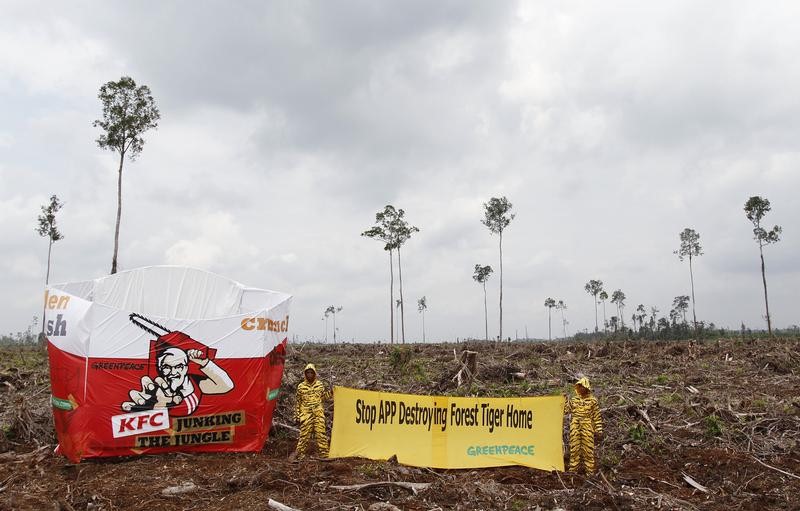
On Tuesday February 5, 2013, Asia Pulp & Paper announced their new Forest Conservation Policy in favour of Indonesia’s rainforests. After much pressure from the public and NGOs who launched a campaigns against them for large-scale clearing of rainforests, their ‘Sustainability Roadmap’ plan includes ending all further development on forested land (including peat forests), reducing greenhouse gas emissions, NGO monitoring, and conflict resolution with communities affected by the development. The campaign against APP was largely publicized by Greenpeace in 2010 which was joined by numerous other organizations and rallied thousands of international supporters from the public who participated through letter-writing and online petitioning. Companies that cut ties with APP after the exposure include KFC and Mattel, and others such as National Geographic confirmed that they would not buy from them.
   It great to hear that the Indonesian Rainforests and all the animals living within them (including but not limited to orangutans, great hornbills, and Bengal tigers) are no longer threatened by APP. Rainforests also provide the planet’s atmosphere with much-needed filtration which every living thing on the planet requires. Also, some resources in the rainforest have been used for medical treatments, and reservation of those resources are necessary for people suffering from such illnesses to be treated. Still, there is much to be done before the rainforest can be considered “saved,” and heightened public awareness and pressure may incite more progress.
   Hopefully this is one of many more steps to be taken in conservation of rainforests. The campaign has raised a lot of public awareness and interest, with the orangutan and Bengal tiger shown as the faces of Indonesian rainforests. APP’s sister company under Sinar Mas, Asia Pacific Resources International (also known as “APRIL”), has been sent a letter, urging them to take similar steps to create a Conservation Policy of their own. It is evident that many consumers will pressure companies for “greener” products, and that it can be affective. With the heightened awareness through media and public participation, events like this may help give a boost in conservation.


Greenpeace activists campaigning against APP. (photo from Greenpeace.org)


References


*This is part of a series of older environmental news summaries.