Showing posts with label illegal hunting. Show all posts

Wednesday, 4 February 2015

Two Sides of Illegal Hunting Parts 3A & 3B: Personal Reflection & Conclusion

(Note: This is the final part of the series Two Sides of Illegal Hunting which explores both sides of the issue of illegal hunting. Parts 1A and 1B introduce with reasons to explain why illegal hunting happens, and parts 2A and 2B will feature consequences and reasons against it. A third section, an informal reflection, is also included. Links to the full series can he found here: http://naturenimbus.blogspot.ca/p/series-two-sides.html)

Sentience & Personal Reflection (Informal Addition)

This section was not included in the original essay as it was a technical written assignment but it is incomplete without it. A large part of me resents the technical nature of this series as well as other pieces I have written because the heart of most environmental debates and conflicts transcend individual facts and statistics but deal with the value of life and the situation as a whole. Economy is a linear system built on numbers and the number of births and deaths may leave you with a population count, but we don't have a unit to quantify sentience or the value of a life. We may not know how to measure everything, but in nature everything has a purpose regardless of whether or not it was measured and by ignoring intuitive aspects without statistics an argument is made more one-dimensional and leaves holes because some things don't feel right for a reason.

As mentioned in the outset, I believe just because something is legal that doesn't make it okay, and therefore just because something is illegal that does not make the action itself inherently wrong. Looking at this in a technical way we are list of numbers, and unfortunately because greed is a feeling that can assign itself a number that feeling often sneaks in with the title of a reason while things such as care are dismissed.
Some may argue that feelings are not reasons, but often they lead us to reasons we just didn't see yet and just because they can't be measured that doesn't mean they don't have an effect. Seeing issues based solely on statistics versus choosing to not dismiss intuitive direction means the difference between seeing the world in a series of shades on a single scale and seeing it in colour, but it can only work if we are willing and able to see the entire spectrum. Although we may not have a unit of measurement that we can use to compare one person's argument with another or even the ability to match the will to know and take into account all the facts, but that is where empathy comes in.

As sentient beings, animals are capable of experiencing pain and suffering. Elephants have even been known to hold a grudge, remember acts of kindness and pass that on to others, but none of their population statistics showed that. Numbers showing money made by poachers did not show if the motive was to feed a family or if it was a trafficker or someone's greed and desire for luxuries. Neither of the statistics showed the loss families suffered because of the greed of others, or the way elephants mourn for their own dead.

We may not be able to know all the facts, but when we accept that and make up for it in empathy and a view of the bigger picture, it becomes more clear.

Personal Opinion (formal) and Conclusion

The effects of illegal hunting extend both to wildlife and the ecosystem as a whole, including humans. I do not think it is not justifiable to kill for aesthetics or out of greed, and though it is more understandable when it is done out of poverty and genuine need markets are fueled by consumer demand, and it is important to help find people in those situations alternative ways of making a living. Every reason to justify illegal hunting is also a reason against it, because unsustainable practices not only destroy natural heritage but eventually will eliminate the resource entirely in an example of “tragedy of the commons”. Although hunting out of need is the most valid argument, eventually unsustainable practices still come back to us and other living things because are all part of the ecosystem. Cultural preservation should come second to life and sustainable ecosystems, because that is the natural heritage of every living thing on this planet.

The justifications are subjective and involve many other influencing factors; the consequences however, are absolute and can be applied to any unsustainable hunting practices on a wide scale, legal or not. The reasons behind preserving wildlife such as respect for life and maintaining the health of ecosystems that we all share. From either a biocentric or anthropocentric standpoint, it is clear from the first law of ecology that “everything is connected to everything else”, that our well being is tied to that of wildlife, and it is vital that we make the health of the ecosystem we all share priority.

Tuesday, 3 February 2015

Two Sides of Illegal Hunting Part 2B: Loss to Biodiversity & Ecosystems

(Note: This is part 2B of the series Two Sides of Illegal Hunting which explores both sides of the issue of illegal hunting. Parts 1A and 1B introduce with reasons to explain why illegal hunting happens, and parts 2A and 2B will feature consequences and reasons against it. A third section, an informal reflection, will also be included. Links to the full series can he found here: http://naturenimbus.blogspot.ca/p/series-two-sides.html)


Loss To Biodiversity & Ecosystems

History has proven multiple times that the threat of extinction for species that are over-hunted is warranted; in conjunction with other environmental threats such as loss of habitat, humans have caused losses to our planet’s biodiversity. The dodo bird is a well-known animal that was brought to extinction because of overhunting by humans. Dodo birds’ lack of flight and fear made them vulnerable to human hunters, leading to their extinction in the mid-to-late 17th century, despite only being discovered in 1581 (Czartoryski, 2011). Without regulations set in place and abided by to limit the killing of birds, they were wiped out due to overhunting, leaving the details of their species lost in history. But even if regulations are set in place, if they are not followed dire consequences are bound to occur.

By extension illegal hunting also affects all other life in the ecosystem by extension and without limit, affecting other species whose survival depends on the other, or which is controlled by the other. Studies showed that the poaching of tropical birds and mammals for bushmeat “can cause zoochorous trees to suffer from reduced seed dispersal.... Recent and ongoing extirpations of vertebrates in many tropical forests could be creating an extinction debt for zoochorous trees whose vulnerability is belied by their current abundance.” (Brodie, 2009). Because of interdependency within an ecosystem, an effect on one population may also inadvertently affect other species.

As mentioned previously, tigers are becoming more rare due to poaching and habitat destruction. About a century ago there were about 100 000 tigers in the wild, but many have now there may be as few as 3 300, putting them at risk of extinction (World Wildlife Fund). Similarly, despite African elephants’ vulnerable state and protection by law, National Geographic’s Investigative report from 2012 showed that in 2011 poaching levels were the peak of the decade. That same year, in Central Africa more than half of all elephants found dead were illegally killed (Environmental Investigation Agency, Petitioner International Rhino Foundation, Petitioner, June 2014) and because of declining populations they are currently a vulnerable species and more and more of their lives are brought to an end by poachers to take their tusks, diminishing biodiversity (Blanc, J. et al. 2008). The range for African elephants already diminishes with an expanding human population, and with both habitat loss and hunting, the estimated population of African elephants went from 1.3 million elephants in 1979, to 472 000-690 000 in 2007. The slaughter of elephants for their tusks extends beyond Africa, also into different countries in Asia including China where 90 600 pounds of ivory was seized from 1989-2011, and the amount of seized ivory to measure killings only represent a portion of elephants slaughtered for their tusks. This loss of life also affects other parts of the ecosystem which elephants are a part of. As mentioned previously, Countless animals have been affected by unsustainable human activity, and not adhering to hunting regulations threatens the very existence of entire species.


Sources (for this part only)
Brodie, Jedediah. "Bushmeat poaching reduces the seed dispersal and population growth rate of a mammal-dispersed tree.." National Center for Biotechnology Information. U.S. National Library of Medicine, n.d. Web. 2 June 2014. <http://www.ncbi.nlm.nih.gov/pubmed/19544729>.
Czartoryski, Alex . "Hunter Safety Blog | HunterCourse.com." 10 Animals Hunted (or Nearly Hunted) To Extinction «. N.p., 24 Aug. 2011. Web. 23 May 2014.
<http://www.huntercourse.com/blog/2011/08/10-animals-hunted-or-nearly-hunted-to-extinction/>.
Blanc, J.J.; Barnes, R.F.W.; Craig, G.C.; Dublin, H.T.; Thouless, C.R., Douglas-Hamilton, I.; Hart, J.A.. African Elephant Status Report 2007.
Environmental Investigation Agency, Petitioner International Rhino Foundation, Petitioner, Petition to Certify Mozambique as Diminishing the Effectiveness of the Convention on
International Trade in Endangered Species of Wild Fauna and Flora (CITES). (June 2014).
. Retrieved February 2, 2015, from http://eia-global.org/images/uploads/FINAL_Mozambique_Pelly_Petition_Appendix_B_June_27_2014.pdf

Monday, 2 February 2015

Two Sides of Illegal Hunting Part 2A: Tourism

(Note: This is part 2A of the series Two Sides of Illegal Hunting which explores both sides of the issue of illegal hunting. Parts 1A and 1B introduce with reasons to explain why illegal hunting happens, and parts 2A and 2B will feature consequences and reasons against it. A third section, an informal reflection, will also be included. Links to the full series can he found here: http://naturenimbus.blogspot.ca/p/series-two-sides.html)

Reasons Against Illegal Hunting: Tourism

Sometimes there is a conflict of interest in terms of economic benefit versus the protection of nature, but tourism is an industry that often depends on local wildlife. Ecotourism has become a popular choice for many tourists, and popular activities such as Safaris has provided an additional economic incentive to preserve wildlife. A “trophy-hunted” elephant may be sold for $4 000 to $20 000, with the often-forgotten cost of the rest of the elephant’s life, which may be as long as 60 years or more in the wild*. However, throughout an African elephant’s life free in its natural habitat, it may produce a revenue of $1 million distributed along different aspects of the tourism industry, including travel agencies as well as the local economy (Animal Welfare Institute, 1983). People are naturally attracted to beauty found in nature, and will often choose to spend their money to see animals in their natural environment, especially rare, endangered, or vulnerable ones like African elephants. Similarly, according to Lee Durrell’s State of the Ark (1986), a hunted lion may be sold for up to $8 500, but a mature male lion living in the wild may attract $500 000 in tourism revenue (Animal Welfare Institute). The tourism industry is an important part of some countries’ income, as well.

The money gained from tourism can be put towards the local community as well, reducing the need for illegal hunting by providing employment and by extension greater degree of social empowerment. This is exemplified by the fact that in 2011 “tourism accounted directly or indirectly for one in every 20 jobs in Sub Saharan Africa in 2011, and is one of the few industries on the continent in which women are well represented as employees and managers” (World Bank, 2013). Often there are conflicting opinions on the value of money weighed against the value of life*, however even if the unit of measurement is in dollars, these animals are still worth more alive in their natural habitat than dead on the blackmarket.
* The nontechnical aspect in part 3 (the final part) will elaborate on this point.

Sources (For Part 2A only)
Animal Welfare Institute. "Trophy Hunting vs. Ecotourism Revenues Endangered Species Handbook." Endangered Species Handbook. N.p., n.d.[1983?] Web. 2 June 2014. 
<http://www.endangeredspecieshandbook.org/persecution_trophyecotourism.php>.
Durrell, Lee. State of the Ark. 1986. Web. Sept 2013.
World Bank News. "Africa's Tourism Set to Boost Economic Growth, Create New Jobs, and Now Outpace Other Regions for New Tourism Investment." World Bank News. N.p., 3 
September 2013. Web. 2 June 2014. <http://www.worldbank.org/en/news/press-release/2013/10/03/africa-tourism-economic-growth-new-jobs-tourism-investment>.

Friday, 26 December 2014

Two Sides of Illegal Hunting: Poverty (part 1B)

(Note: This is the second part of the series Two Sides of Illegal Hunting which explores both sides of the issue of illegal hunting. Parts 1A and 1B introduce with reasons to explain why illegal hunting happens, and parts 2A and 2B will feature consequences and reasons against it. A third section, an informal reflection, will also be included. Links to the full series can he found here: http://naturenimbus.blogspot.ca/p/series-two-sides.html)

Reasons Behind Illegal Hunting: Poverty
One of the biggest reasons poachers take the risk of trespassing onto private property to hunt illegally is poverty. Many species are protected by the law because they are rare, also causing them to be considered more valuable to buyers and a means of potential economic benefit to those who can catch them.


Today the rarity of tigers makes their skins, bones, teeth, and claws even more valuable to those looking to purchase them. World Wildlife Fund states, “Parts from a single tiger can fetch as much as $50,000 on the black market, making the poaching of these magnificent creatures very alluring to criminal networks” (World Wildlife Fund, 2013). While some parts of animals like tiger skin and bone wire are bought as luxuries and status symbols, an illegal hunter’s reasons for poaching often are not out of want for luxuries, but out of need.


Although elephant tusks are not taken to meet any needs for survival for the consumer, it could help provide for the needs of the hunter, as “[a] single large tusk sold on the local black market can bring $6,000, enough to support an unskilled Kenyan worker for ten years” (Stirton, 2014).
139_1987306-W[1]
Ivory carved into charms and ornate patterns. All images are from Encyclopaedia Brittanica ImageQuest Archives. 
In another African country, Tanzania, a survey of hunters by M.R. Nielsen conducted in 2006 in the Udzungwa Mountains found that illegal hunting is linked to poverty, family size and “composition”, or members. In another survey the following year conducted by E.J. Knapp in a region in Tanzania, no poaching households reported having full-time employment (Brennan, 2011). The connection between lack of employment and illegal hunting, especially in economically desperate regions. Tanzania’s  Gross National Income (GNI) per capita in 2012 was $570, almost $1000 below that of the average in Sub-Saharan Africa, and far below that of Canada with a GNI of $51 570 per capita in 2012 (World Bank, 2014). Unlike developed countries like Canada that import much of its goods including food products, Tanzania is highly dependent on agriculture but only a little more than 4 per cent is arable land, and an estimate by the World Food Program states that about 40% live in chronic food-deficit areas (World Vision, 2014). In areas where primary means of making a living is unreliable and opportunities to earn resources are limited, some turn to illegal hunting to make a living.


In a different mountainous region in Vietnam,
“[Ho, a] Pa Co ethnic man from the mountainous A Luoi district in Thua Thien-Hue province used to collect firewood for a living, but he started to hunt in 2010 after he saw a local restaurant owner buy a 50kg pig for 2.5 million dong. In contrast, 60kg of firewood is only worth 400,000 dong and he could not support his family, he says.” (UCA News, 2012)
In Vietnam, Ethnic minority groups like Pa Co often live with an underdeveloped infrastructure, isolated them from any of the country’s prosperity. These groups often depend on on low agricultural yields and forestry like Ho did, and a 2004 survey found that over 60% of minority groups were below the poverty line (Global Exchange, 2011). Just as with legal products, illegally hunted wildlife on the black market is backed by a continual demand from consumers, and economic need and poverty motivating the hunters to take that risk.


Works Cited (for this part only)
Brennan, Dervla, Mikolaj Czajkowski, Asanterabi Lowassa, Anke Fischer, Nick  Hanley , Mirko  Moro , and Loi  Naiman. "What can be done to reduce illegal hunting?  An investigation using choice experiments in the Serengeti,  Tanzania ." bioecon. N.p., n.d. Web. 28 May 2014. <http://www.bioecon-network.org/pages/13th_2011/Hanley_1.pdf>.
Global Exchange. "Vietnam: Poverty in Vietnam | Global Exchange." Global Exchange. N.p., n.d. Web. 2 June 2014. <http://www.globalexchange.org/country/vietnam/poverty>.
Stirton, Brent. "Blood Ivory". National Geographic Oct. 2012: 63. Print. Web. http://ngm.nationalgeographic.com/2012/10/ivory/stirton-photography
UCA news reporter. "Illegal hunting is big business, driven by poverty - ucanews.com." ucanews.com. N.p., 14 Aug. 2012. Web. 26 May 2014. <http://www.ucanews.com/news/illegal-hunting-is-big-business-driven-by-poverty/58145>.
World Bank. "Tanzania." The World Bank. N.p., n.d. Web. 1 June 2014. <http://data.worldbank.org/country/tanzania>.
World Vision. "Country Profiles: Tanzania." World Vision. N.p., n.d. Web. 29 May 2014. <http://www.worldvision.org/our-impact/country-profiles/tanzania>.
World Wildlife Fund. "Problem." Save Tigers Now. N.p., n.d. Web. 27 May 2014. <http://www.savetigersnow.org/problem>.
All images are from Encyclopaedia Brittanica ImageQuest Archives.

Thursday, 18 December 2014

Two Sides of Illegal Hunting Part 1A: Cultural Expression

Illegal Hunting
(Part 1A)
Melody Tadeo

For many species, hunting is an important part of survival which naturally plays a part in maintaining a sustainable ecosystem. It is a basic instinct that continues the movement of energy between biological organisms and a large part of the flow of natural food chains. It nourishes and keeps populations under control, however, as is the case with many other natural and processes this too has been over-exploited and has caused problems that many believe make it necessary to make hunting of certain species against the law.

Nevertheless, just because something is illegal that does not necessarily make it inherently wrong, and just because something is legal that does not automatically justify it. While the rules vary in scope and scale around the world, some are willing to risk the legal and environmental consequences.

(Note: This is the first part of the series Two Sides of Illegal Hunting which explores the various perspectives of parties involved in and affected by illegal hunting. Parts 1A and 1B introduce with reasons to explain why illegal hunting still happens, and parts 2A and 2B will feature consequences and reasons against it. Although this was a technical assignment, a third nontechnical reflective section will be included. Links to the full series can he found here: http://naturenimbus.blogspot.ca/p/series-two-sides.html)

Reasons Behind Illegal Hunting: Cultural Expression

Sometimes one reason illegal hunting takes place is one to gather resources to be used in cultural expression. African elephants are often killed by poachers —hunters who trespass to hunt illegally—  for their tusks, providing material for the demand for ivory for various cultural traditions. Ivory carving is traditionally done in Asia to create religious objects, and amulets are believed to bring the wearer luck and protection from harm in general, and particularly black magic. National Geographic’s investigative report published in October 2012 stated “although the world has substitutes of all of ivory’s practical uses, its religious use is frozen in amber.” An individual expresses, “[ivory] is very precious... so to be respectful [of God] one should use precious material” (Christy, Bryan, 2012). Also believed by some to bless both the giver and receiver of ivory, it is a valuable material in high demand that some use in both religion and cultural artistic expression for the bone’s aesthetic appeal. Parts of a tiger such as the whiskers, eyebrow, teeth and paw soles are also believed to hold magical abilities. These are used in traditional magic rituals and some believe they hold special powers to people who wear the teeth, protecting the wearer from curses similar to the use of ivory, and as a means of cultural expression.

149_2053603-W[1]
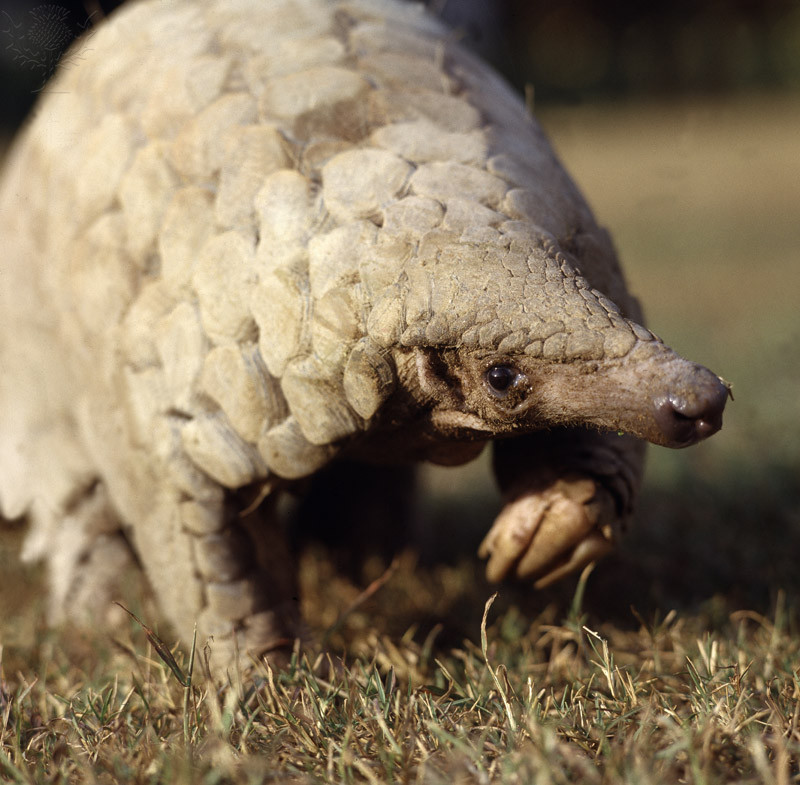
An adult pangolin. All images are from the Encyclopaedia Brittanica ImageQuest Archives.
Pangolins are a scaly, ant-eating mammal and an endangered species protected by law that is used in some traditional Chinese medicine. The scales, called Chan Shan Jia, are “traditionally used in Chinese medicine to disperse blood stasis... reducing swelling and promoting discharge of pus... and for expelling wind-dampness (for pain due to... arthritis)” (The Journal of Chinese Medicine). This practice has preserved one small part of  Chinese culture in a world that many believe is becoming  increasingly “Westernized” and less culturally diverse. Not only as a cultural tradition, Chan Shan Jia has also proven to be an effective natural remedy and benefit to human health. However, although other natural alternatives to pangolin scales have been found (The Journal of Chinese Medicine) they continue to be hunted for pangolin wine for their aesthetic appeal. Their scales and skin are sometimes used in the fashion industry, a vanity some willing to pay a lot of money for which provides more incentive for traffickers (Soft Schools).

Works Cited (for Part 1)
Christy, Bryan. "Ivory Worship." National Geographic Oct. 2012: 63. Print.
The Journal of Chinese Medicine. "Pangolin." The Journal of Chinese Medicine. N.p., n.d. Web. 28 May 2014. <http://www.jcm.co.uk/endangered-species-campaign/pangolin/>.
Soft Schools. “Pangolin Facts”. Soft Schools. N.p., n.d. Web. December 2014. http://www.softschools.com/facts/animals/pangolin_facts/108/

All images are from Encyclopaedia Brittanica ImageQuest Archives.