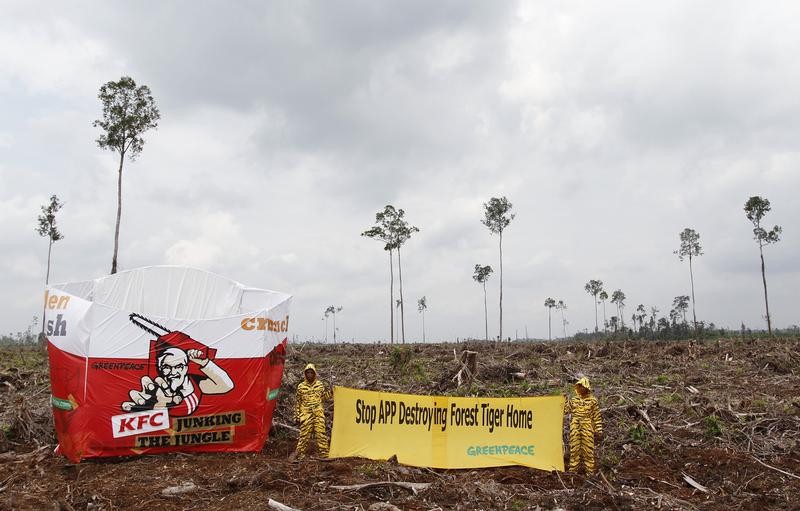
So what's the problem? Same answer as usual: social and environmental problems.
However, there are two sides to this coin. But of all the stressors humans put on the environment, why are we picking on palm oil?
Hint: Look at the list in the first post in the series. Cup ramen, margarine... I know those are products I use.
Palm oil something we can pick on in our day-to-day lives, a small thing with an impact that is amplified in the big picture once it goes down the line, and if al ot of people can make even a small change, it all adds up. Despite Earth's notorious abilities for self-restoration, as a resource not only is palm oil particularly high-maintenance when it comes to being produced and sold conscientiously, but we use a lot. According the the WWF, by the year 2000 it was the most widely traded vegetable oil, at 65% in 2006 and it was expected to rise. (And that's why people like you and I are here reading webpages like these, so we can make informed decisions about what we buy, contributing to larger trends in the bigger scheme of things).
So what problems do you help prevent when you out the palm oil?
Deforestation and Significant Interruption of Natural Cycles (The Global Picture)
85% of palm oil sold throughout the world is exported from Indonesia and Malaysia. The issue of climate change easy comes to mind, and although the hype seems to have gone down in pop culture, it is a long-term problem that communities the world over continue to struggle to adapt to.
We look at the emphasis on recycling to minimize our tree consumption and it's clear how important it is; sustainable farming for other tree-related resources works the same way and you are in a sense helping everyone each time you minimize your use.
Habitat Loss (Big picture of Biodiversity)
The zones where the palm trees are farmed are areas that many members of vulnerable species call home. 85% of palm oil sold throughout the world is exported from Indonesia and Malaysia. At the moment, one third of all species of mammals in Indonesia are listed as critically endangered and loss of habitat is a big player.
The Rights of Animals (Value of Life)
In the process of deforestation, animals are both displaced and killed. The sad truth is that during the fall of their home animals might be crushed, buried alive, or even intentionally slaughtered in machete attacks. Hot topics such as veganism and animal testing often spark much controversy, but the loss of life here serves no purpose.
Impacting People (Human Rights)
Depending on the location, the destruction of habitats for animals may also be the destruction of ecosystems that people living in those areas depend on for their livelihood. Unfortunately, what may on one side say 'job opportunity' may also translate to unsafe work environments where violations of human rights can easily unnoticed, and workers are often not given the returns they hoped for and really need..
For most people familiar with environmental issues these areas of impact are easy to grasp. But now time for the million dollar question: If it's so bad....
Why do people farm palm oil?
In a word, poverty. For a little under two years I have worked with Plan International Canada and learned so much (how to be verbal and expressive on important subjects, how stupidly lucky I am to be born where I was...) but one thing is it really educated me on what the cycle of poverty really is; a lack of opportunities perpetrates lack of opportunities. Often the ultimate motivation behind environmental issues is greed for what we do not need, but in the case of palm oil, as it with illegal hunting, the people harvesting the product need the money. They need it to buy their own food, to send their children to school, to prevent having to resort to child marriage. In fact, according to Girls Not Brides, Indonesia (one of the biggest exporters of palm oil next to Malasia) is in the top ten countries with the highest absolute numbers of child brides.
Once we imagine being in that situation, a job opportunity from a wealthy prospector looks like it could be a way out, but unfortunately as discussed in the preceding section, it would be easy for the people who need it most to be exploited.
Let's take a breather for a sec. Remembering the big issue can be overwhelming, but it can be a good reminder to not lose sight of the true essence of what it means to be socially-conscious. When people care and act in that principle, even though the issue is bigger than ourselves as least we will be oriented in the right direction and that is the first step in helping. Even if what we do does not change the whole world, it might change somebody's world, and that's why a balanced approach to helping with both environmental and social issues is still worth it.
So what can we do about this high-maintenance diva of an oil?
That will be discussed in final part of "What's Up With Palm Oil".
Sources:
http://www.saynotopalmoil.com/Whats_the_issue.php
http://wwf.panda.org/what_we_do/footprint/agriculture/palm_oil/
http://wwf.panda.org/what_we_do/footprint/agriculture/palm_oil/environmental_impacts/forest_conversion/
http://stories.plancanada.ca/3-girls-who-refused-child-marriage/
http://www.girlsnotbrides.org/child-marriage/indonesia/
[Note: Date and time for this post has been set to be consistent to when the sources were used)