Thursday, 18 February 2016

Dear Readers...

Dear Readers, sustainable city-folk, citizen scientists, wayward wanderers, audacious explorers, and other friends,

Sorry for the shorter and less frequent posts lately. Things have gotten pretty hectic and have changed a lot, but I think mostly for the better. Among other things I have been working on some more creative pieces on lunar-winds, and the voice of Nature Nimbus has also changed. This blog really is for the love of nature in general, so while the style is evolving hopefully that will also allow for more variety and colour in the types of posts that will be here.

There will be a poll on the sidebar for the next little while where you can vote for what type of post you would like to see next. I'd love to hear from you! If there is a specific topic you would also like to suggest, please feel free to submit it in the contact form at the bottom of the page.

Thanks so much for reading and your support!

Happy trails :)

Melody

Thursday, 11 February 2016

Wind Festival 2015 (Fun Post)

So I have a thing for the wind. Its capricious beauty affects so much physically within an ecosystem, and its unseen and almost spiritual nature is also captivating for those who stop to listen.

In the summer of last year I had the joy of painting kids' faces and working at a skulls and furs booth, as a volunteer at the Kortright Centre for conservation's 2015 Wind Festival. The Kortright Centre is a beautiful raw gem in Southern Ontario that children and their families connect with nature, and nurture respect and love for the environment and our natural heritage.

The wind festival had lots of nature-themed booths and activities for families, and next year I hope to attend as a visitor (and bring my kite!)


Edited 2021-01-12

Thursday, 31 December 2015

Sky Candy

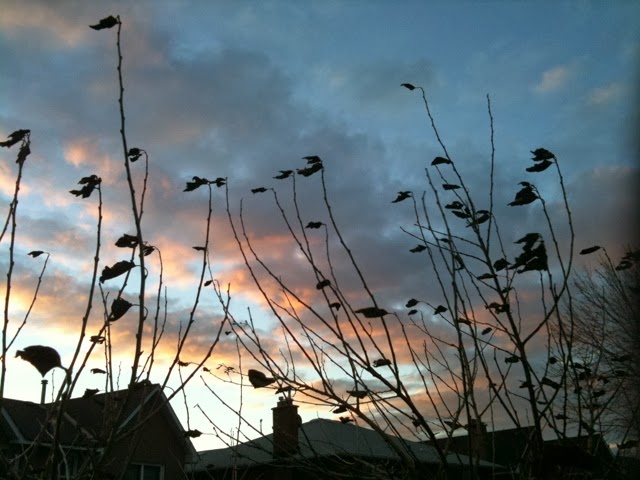
Good evening all, and last evening of 2015!  For the last post of the year I thought maybe some sky-candy would be a nice wrap-up. Do you recognize any of the cloud types below by name?

Again apologies for the lack of posts and overflow of photos (more quality science posts are soon to come) but here's a small reminder of one the natural highlights throughout the winter months... cloudwatching! Warm colours of winter sunsets against icy landscapes here in Ontario leave not only vibrant colours, but also potentially sun pillars to keep an eye out for. (click the link to learn more about this natural phenomenon)

Have a happy and safe start to the new year :)


(One on the left look familiar?)


Wednesday, 23 December 2015

Algonquin Park 2015


After much waiting and attempts at getting photos off a hard-to-crack device, here is a link to an album of photos from Algonquin Park this August.

(https://goo.gl/photos/1GvKxfyKPuRiTXRw9)

We had a fantastic time and over the next few days I'll be updating this photo journal (which still does not have identifiable faces, but maybe we'll get to that point eventually).

Saturday, 30 May 2015

What Will You Do?

Whether it be about environment, poverty, social injustice, or another issue, one of the worst feelings at the end of many documentaries is this feeling of "now what?" Let me explain.

The term 'informed citizen' is a relatively common term. In school that was a term used a lot in the social science departments. I remember at least two first-day classes where the teachers asked something like "how many of you actually read the newspaper on a regular basis, and not just the comics?"

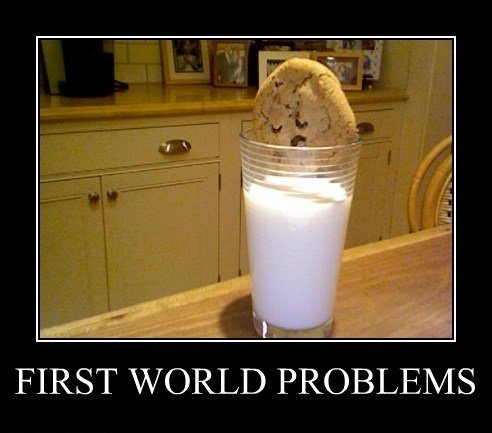
Some have pointed out how memes like this suggest
that people in third world countries never have these
'problems',  when that is not necessarily true. However, 
the purpose seems to be more to point out how small many
common inconveniences really are in an amusing way.
What the teacher was probably getting at was having a big-picture perspective. When we are an informed citizen and are aware of the bigger picture, it's easier to appreciate what we have and increased appreciation for what we do have and not take things for granted.

While that brings some personal benefit, reading about what happened in the news or seeing it in a documentary doesn't change the problem. When we are personally touched, empathizing and feeling for the issues we hear about, the best thing we can do is take action. Allowing both your mind and heart to be affected is what brings changes, even if small.

On a personal level, after a few years of involvement in school clubs and environmental education, I became a little disenchanted for a while with certain parts of the environmental movement. In both of those classes on the first day it was a bit of a rainy day and the cool, basement classroom with cracks in the walls still smelled like geography, but didn't feel like it any more, if that makes any sense. Everything seemed to become so technical, always a matter of measuring and predicting, budgeting and diplomacy. You can have all the facts and figures you want but if people don't care then what difference does it make?

Sometimes reading the comics can give you something that the article didn't.
I'll admit that this is laced with some remaining bitterness that I am fighting one step at a time (the same way we make any sort of progress), and it's is kind hard to express. The purpose is certainly not to diminish the value of keeping up with world events or having knowledge of people and cultures and things outside of our own bubble, because that is very important too. What I do mean to say is that head knowledge is not enough, but being moved to act is what will help.

Hearing a fire alarm is not enough. Knowing what the fire alarm means is not enough. It's getting out of the building or fighting the fire that gives you a chance. In the case of most humans and other living things caught in the midst of a global issue, a calm and orderly exit is not a viable option.  Despite the daunting  messes humanity finds itself in time and time again, there are still people who care and even if taking that small step can't save the world, it can still help make a difference in someone's life.

There is something amazing about the way children look at nature. The wonder of watching dandelion seeds drift away from your breath, seeing the wings of a dragonfly glint in the sunshine, hearing not only the call in a bird's voice but a song. That it powerful, motivating, and makes us happy. Science is generally associated with words like 'logic', 'left-brained' and 'facts', but that doesn't mean you have to ignore the part of you that loves nature from the heart in order to explore or save it.

Opening up to hope or anything else can be very hard. Making yourself vulnerable to disappointment and the judgement of others such as those who say 'be realistic' is hard; recovering from being someone who said 'be realistic' is hard, but even if the difference is small allowing yourself to hope and to give the benefit of the doubt to a perfect stranger can make you and them a better person.

Carry a better world inside of you and let it come out through your eyes and words and actions. See the world and see people for a positive potential and your eyes will be more beautiful. Base your actions on those ideals and you will have a more beautiful life. Potential isn't something that is already there, but seeing it means being willing to make yourself vulnerable and though it won't always work it still makes a difference.

As a kid once my mom and I went to the closing of a Laura Secord shop and they had a little Chicken Soup for the Soul book which contained a memorable story. Here is a variation of Loren Eisley's The Starfish Story:
     One windy morning a man was was taking a walk across a beach that was littered with thousands of starfish.
     Along the way he saw a boy stooping picking up starfish and throwing them back into the water to save them from the heat of the sun. 
     "There are thousands of starfish," the man said to the boy, "it won't make a difference."
     The boy picked up another starfish and threw it into the water and  said, "It made a difference to that one!"

We won't always save the world, but a big difference is made up of many small changes the same way a long journey is crosses with many small steps.

It is worth it.

After being informed of something through a newspaper article or thinking 'now what?' after a documentary, you don't have to go numb so as not to be overcome by anxiety. Worry less about what we can't do and focus about what we will do.


(p.s. If you're kind of feeling like that right now, here is a link to an older post with a collection of practical green tips.
http://naturenimbus.blogspot.ca/2014/02/50-green-tips.html 
... Put together many steps will go a long way!)

Friday, 3 April 2015

Next Lunar Eclipse Is Less Than 13 Hours Away!


This is just a reminder that the next lunar eclipse visible from Earth is happening in less than thirteen hours. Click here to find out when it will be visible from your location (http://www.timeanddate.com/eclipse/lunar/2015-april-4). 

From either a scientific or artistic point of view, this is an exciting event that has captivated the eyes of skywatchers in different civilizations for centuries and will be the third of a tetrad (http://naturenimbus.blogspot.ca/2014/10/part-two-of-four-lunar-eclipses-in.html). This will also be the shortest lunar eclipse of the century so there's no time for a snooze if you're in an early-morning region.

This is one of those special occasions when being down on Earth is one of the most inspiring places you could be.

Sources
EarthSky
http://earthsky.org/tonight/shortest-total-lunar-eclipse-of-the-century-on-april-4-2015 

Tuesday, 24 March 2015

Picking the Right Fish in the Sea: Selecting Sustainable Seafood

For generations the  ocean has been both a source of awe
and inspiration as well as physical needs. 
Have you ever had the chance to watch a wave from the ocean roll onto the shore? Somewhere beyond the horizon and farther than you can see, all the right motions started that wave, and you can only imagine all the life and stones and forgotten wrecks that it passed over on its journey.


Sushi is a personal family favourite for making and eating,
but the imitation crab should be selected carefully.
The vast blue seas have long been a source of awe, inspiration, and resources for humans, but as with anything, unsustainable human activity can have serious consequences to marine wildlife and ecosystems (and by inevitable extension, to humans). While the practices place direct impacts on marine ecosystems, consumers have the power the either fuel that damage or reduce it back based on where we spend money.

If you are vegetarian or vegan than you have already eliminated that problem entirely in your case, but for fellow fish-eaters, some organizations have developed research tools to help select the right fish in the sea (for your plate).

Some people reading this may have stopped with the thought, "what about the wellbeing of the people who rely on fishing as a livelihood?" This is a valid concern regardless of how or what they catch. However, if the marine ecosystem collapses then the same fish populations they must draw from will be adversely affected as well as other species that are connected to it. Put simply: Hurt the fish, no fish to catch, no fish to sell, and no fish to eat.

Many people have depended on fishing for generations, but with changes in technology and fishing methods what once was a sustainable tradition has gone sadly overboard in many cases. It is for the long-term benefit of both humans and wildlife that we make more sustainable choices. 


"When the last tree has been cut, the last fish caught, the last river poisoned, only then will we realize that one cannot eat money." - Native American Saying (source: http://quoteinvestigator.com/2011/10/20/last-tree-cut/)

There are a number of online resources but here are a few that I have found to be particularly helpful which evaluate seafoods based on when, how, and what is being caught relative to sustainability. When using these to compare fish and other seafood products remember to check for the specific species, where it came from, and the method (eg. troll, wild, farmed)


Sea Choice (http://www.seachoice.org/) is a nice and full online database with lots of straight-to-the-point charts. If you search something like "tuna" it is easy to compare various options all side-by-side, and if you would like more details you can click on the specific name.

This database is extensive and has easy-to-compare charts for comparing different variants which is good because one detail can make all the difference between 'good choice' and 'stay away'. When researching something like 'tuna' which renders a long list of results, the search function (control+F on Windows) can be very useful in highlighting specific criteria when evaluating a specific product.

Sea choice was also sourced for David Suzuki's Top 10 Sustainable Seafood Picks (http://www.davidsuzuki.org/what-you-can-do/food-and-our-planet/suzukis-top-10-sustainable-seafood-picks/). From the graphics to immediately listing "Ask For" and "Avoid" for each type, I love the intuitive layout of this list. It immediateky addresses questions people will probably have and this flow continues under "More>>" which includes not only cooking information and a recipe but things to learn about the animal itself.

Although it may not feel good to think about how the animal your are eating was once alive, it can encourage respect. Learning about the species as wildlife including the way it once looked and the things it would have done can help encourage deeper respect and appreciation for it.

Monterey Bay Aquarium's Seafood Watch (http://www.seafoodwatch.org/) is another online database which like Sea Choice includes important details. Although details are not always given immediately, the strength of this one lies in the portability of a free app which does not require wi-fi once updates are downloaded (great for grocery shopping), and printable guides.  California rolls are a family favourite in our house for eating and a benefit when we make our own is being able to be more aware of the source of fish we use in it and make choices accordingly. If you like sushi, the Monterey Bay Aquarium's Seafood Watch also has a sushi guide.

If you're interested in reading more about sustainable eating, here is an older post with a few more tips(http://naturenimbus.blogspot.ca/2014/10/world-food-day-some-tips-to-digest.html).

Tuesday, 17 March 2015

Pre-Spring Navigation Updates

Spring is approaching fast and it has been a while since my last NatureNimbus post but it has been even longer since my last Project Noah one so I added some of those and this is just an update.

Project Noah is a website where citizen scientists around the globe can share original photos of wildlife including plants, animals, fungi and 'other', comment and favourite photos, and help fellow nature-lovers identify certain species. It is a great online community with lots of experts, so if your're looking for a place to browse share, and learn about wildlife, Project Noah just may be the thing you're looking for.

You can browse my recent posts by clicking on "Project Noah" at the top of the page in the navigation section under the site name, and here's a sneak peek to a few more that I will be posting next:


     You also may have noticed the new "Lunar-Winds" links as well. Not too long ago I started another blog  for more personal and artsy stuff, Lunar-Winds, but even if less frequent the science-related posts will continue here here on Nature Nimbus. 
     Until next time!